Reading time: 7 min read
Sitecore Content SDK 2.0 is out! Should you upgrade?
The key changes, what they mean for you, and whether it's time to upgrade
Start typing to search...
Sitecore Content SDK 2.0 is here, and this is not just a routine minor version bump. It changes the shape of the SDK, raises the runtime baseline, and makes Sitecore's direction a lot clearer. If you are building new headless projects on this platform, this release matters.
But the real question is whether it matters right now for your project.
Here's the short version:
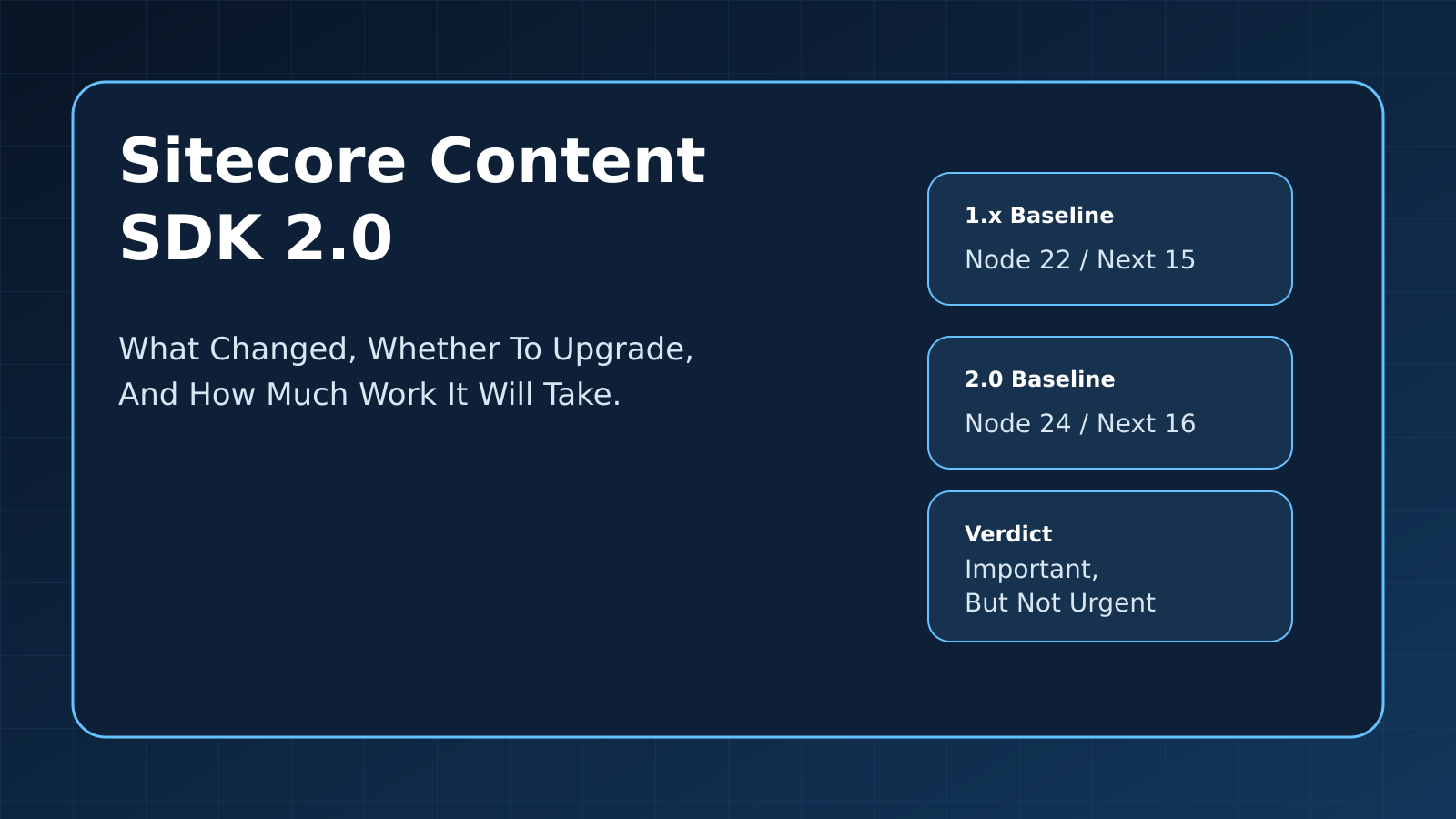
The biggest changes in this release aren't some new flashy AI features, rather it's the overall shape of the SDK. Compared with 1.5.x the SDK has been reorganized into something that feels much more intentional.
In the 1.x line, the core package carried a lot of surface data.
By 2.0, the ecosystem is split more clearly into focused packages like:
This matters because the old core package exposed a broad grab bag of concerns such as layout, media, i18n, site services, and personalization helpers.
In 2.0, that broad surface is no longer packed into core the same way. The result looks more like a modern SDK and less like a kitchen sink runtime.
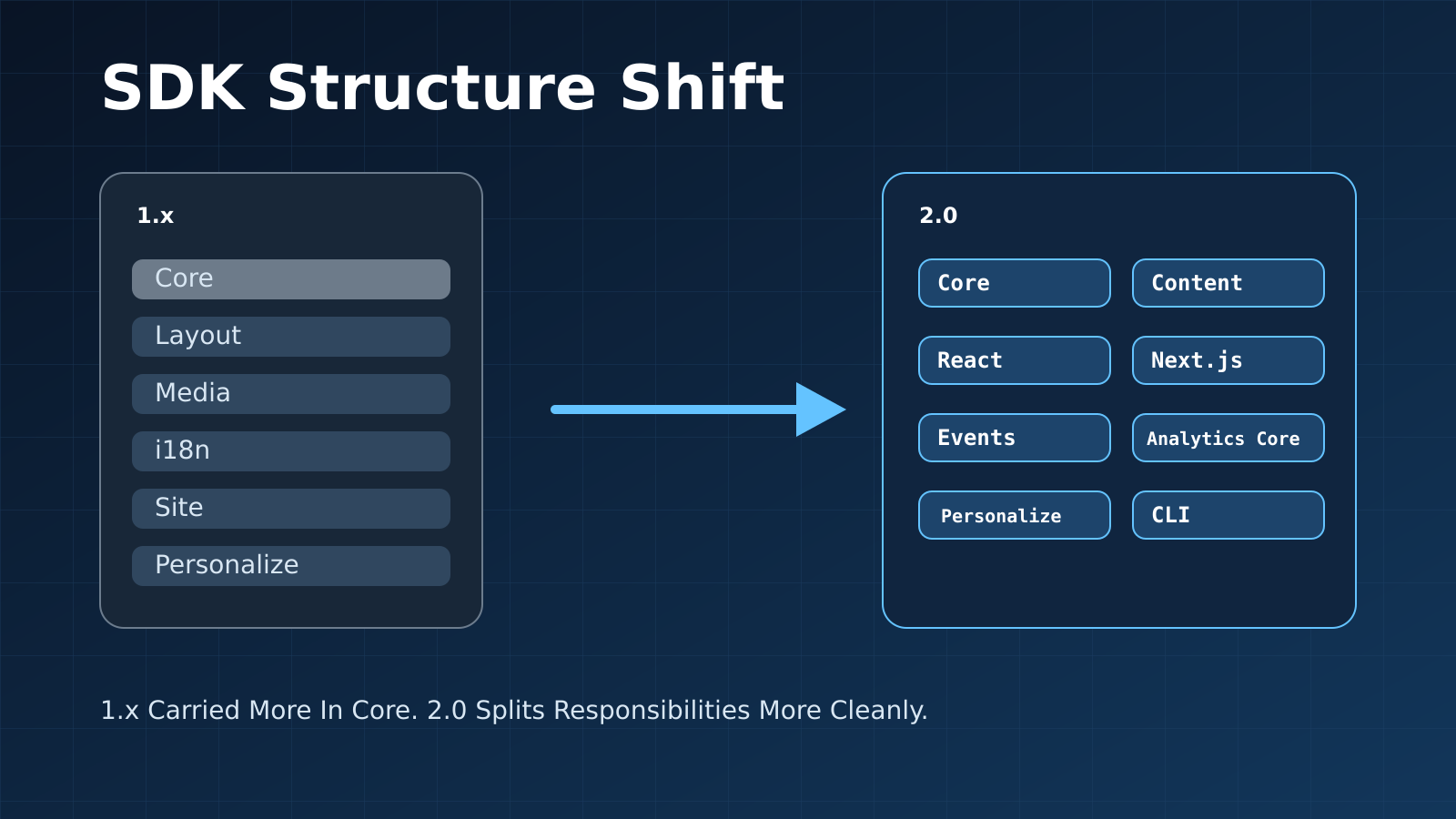
1.x carried more in core. 2.0 splits responsibilities into more focused packages.
The @sitecore-content-sdk/nextjs package also changes shape in a noticeable way.
In 1.5.x, a lot of the framework integration lived under middleware-oriented exports such as:
In 2.0, there is a stronger emphasis on:
There are also explicit exports for things like:
That suggests a more deliberate fit with newer Next.js application patterns instead of leaning so heavily on one big middleware story.
This is one of the biggest practical upgrade considerations. From the published package metadata:
If your app is not ready for Node 24 and Next 16, you are not really just upgrading the SDK, you are moving your runtime baseline too.
In 1.5.x the ecosystem still leaned on @sitecore-cloudsdk/* peer dependencies for events and personalization.
In 2.0, those references have shifted to the Content SDK family itself:
That is a quieter change, but an important one. It makes the SDK story feel more unified and less like multiple overlapping product lines bolted together.
The published packages now include:
That is exactly what you want in a modern developer platform. If Sitecore wants Content SDK to be the front door for new builds, this is the right direction.
While the meat and potatoes of this upgrade revolves around upgrading dependencies and restructuring the architecture, there are some new features you may be excited about.
The best reason to upgrade is not fear, it's trajectory. If you're looking to bring your dependencies up to date, or start to truly leverage the power of AI tools this is a worthwhile upgrade.
Version 2.0 looks like the version Sitecore actually wants people to build on going forward.
The modular package split, the proxy and route-handler approach, and the updated dependency story all point in the same direction: a cleaner and more maintainable SDK.
If you keep building on 1.x forever, you are probably building on the branch that eventually gets left behind. While Sitecore has not officially stated when active support or maintenance ends for Content SDK 1.0, they have previously stated it would be between June 2026 and 12 months after the next major release. That leaves us with this:
| SDK Version | Release | Release Date | Active Support Ends | Maintenance Ends (EOL) |
|---|---|---|---|---|
| JSS SDK 21.X | Deprecated | October 2022 | April 2024 | March 2025 |
| JSS SDK 22.X | Maintenance | April 2024 | July 2025 | June 2026 |
| Content SDK 1.X | Active | July 2025 | March 2026 | Min: June 2026 Max: March 2027 |
| Content SDK 2.X | Active | March 2026 | N/A | N/A |
Source: support.sitecore.com
The 1.x SDK still carried some transitional weight from the old days of JSS SDK. Whereas 2.0 feels more opinionated about its responsibilities.
That usually makes upgrades, maintenance, and onboarding less messy over time.
If your team already wants to move to newer Next.js patterns anyways, or is already upgrading from JSS SDK to Content SDK, doing the Content 2.0 SDK upgrade as part of that work makes sense as you avoid doing two migration six months apart.
No, for most existing teams this does not look like an emergency update. If your current 1.x implementation is stable, shipping, and not blocked by missing functionality, there is no obvious reason to stop everything and rush to 2.0. This is especially true if:
In other words, while 2.0 looks important, it does not necessarily look urgent. If 1.x is doing the job, there is nothing wrong with planning this upgrade properly instead of treating it like a fire drill.
This depends heavily on how deep your current implementation goes. But for most teams, I would put this somewhere between a moderate upgrade and a significant one.
Low Effort: relatively simple consumers
If your app:
Then the work is pretty manageable.
In this case the upgrade mostly requires:
Medium Effort: typical production implementations
This is probably where most teams will land.
If you have a real production app with custom middleware behaviour, multisite logic, redirects, personalization, or editing integration, expect some refactoring. Because the exported surface has changed in meaningful ways.
A 1.5.x codebase likely references patterns and modules that either moved, shrank, or were replaced by newer proxy and route-handler oriented APIs.
That means you are not just changing versions, you are revisiting how the app is wired together.
Higher Effort: heavily customized or older codebases
If your implementation has accumulated custom wrappers, special routing logic, edge cases around Experience Editor integration, or a lot of platform-specific assumptions, the upgrade could be substantial.
If you are evaluating the move from 1.x to 2.0, I would frame it like this.
Upgrade soon if:
Wait a bit if:
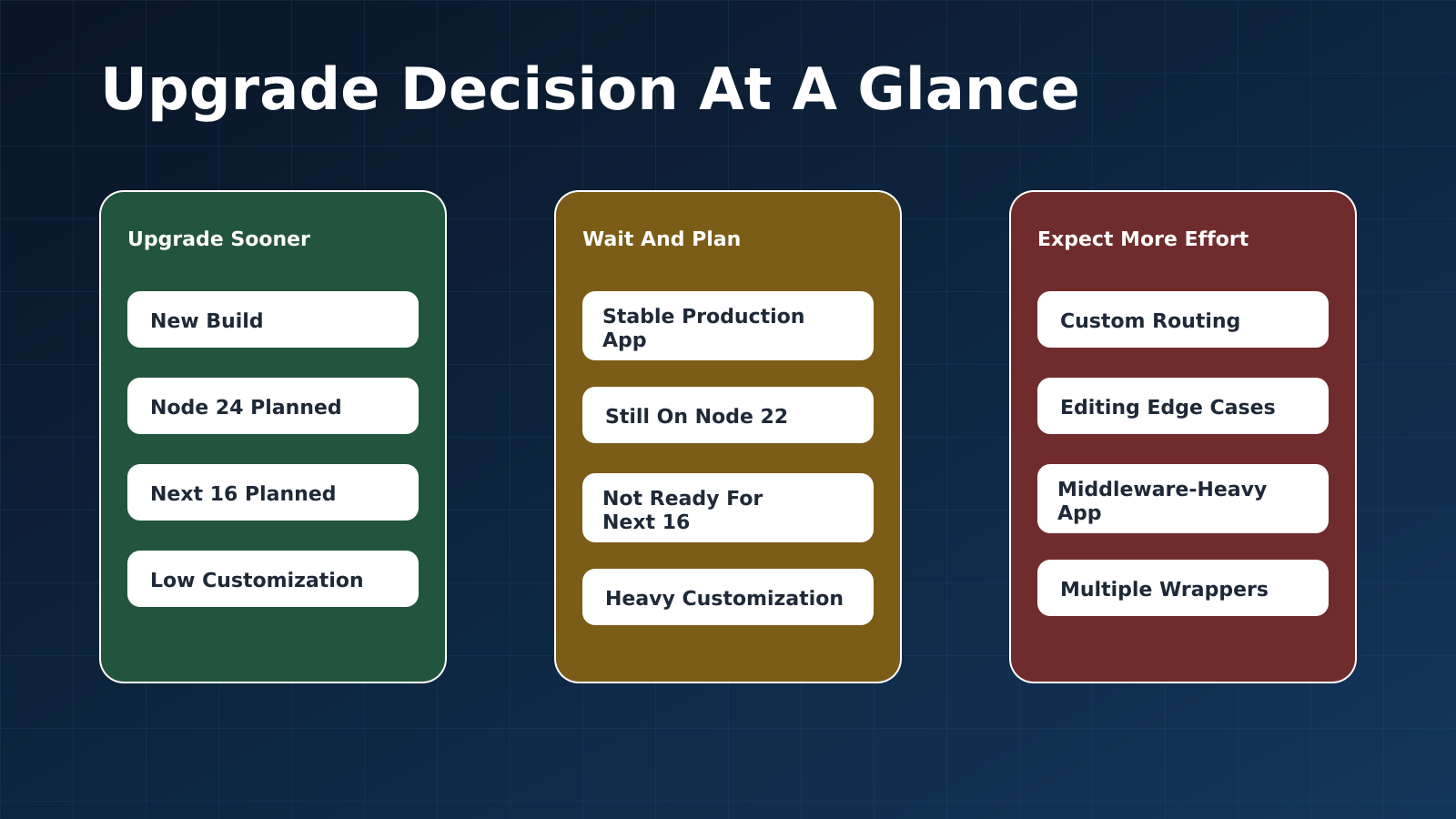
A simple way to decide whether to upgrade now, later, or as part of a larger platform refresh.
Sitecore Content SDK 2.0 looks like a meaningful release. It modernizes the package structure, tightens up the platform story, and makes the framework integration feel more intentional.
For new builds it's the clear starting point. But if you already have a working 1.x production implementation, do not treat this as a drop-everything upgrade. Treat it as a roadmap item, and take the time to plan it out properly and align it with broader platform or dependency updates, not necessarily as a standalone initiative.