Reading time: 3 min read
SitecoreAI Base Image 1.75: The SPE 8.0 change is the part to watch
A practical look at what changed in SitecoreAI base image 1.7.5, why the SPE 8.0 bump matters, and what teams should check before production rolls over
Start typing to search...
SitecoreAI base image 1.7.5 is mostly the kind of release you want to see: better resilience, lower memory use, cleaner logging, and a decent pile of bug fixes. But there's one part that deserves more attention than the rest.
Sitecore PowerShell Extensions is moving to 8.0, and that means older scripts may stop working after the update. If you use SPE for admin automation, content operations, or deployment-related tasks, that's the bit worth watching.
Based on the changelog, this release includes a few meaningful improvements.
There's also a solid list of fixes around publishing, Page Builder validation, thread safety, Content Editor behaviour, and serialization edge cases.
That's useful housekeeping.
The breaking-change-adjacent part is the SPE upgrade.
Sitecore's note says scripts that are not compatible with the newer SPE version may stop functioning after the upgrade.
That's not a cosmetic change. For some teams, PowerShell scripts quietly hold together a lot of operational glue:
If your team has custom SPE scripts sitting in production, this is the sort of release that can look harmless until something routine breaks a week later.
This upgrade matters most to:
If you don't use custom SPE scripts, the risk is probably low. If you do, don't shrug this one off.
The changelog gives a clear rollout timeline:
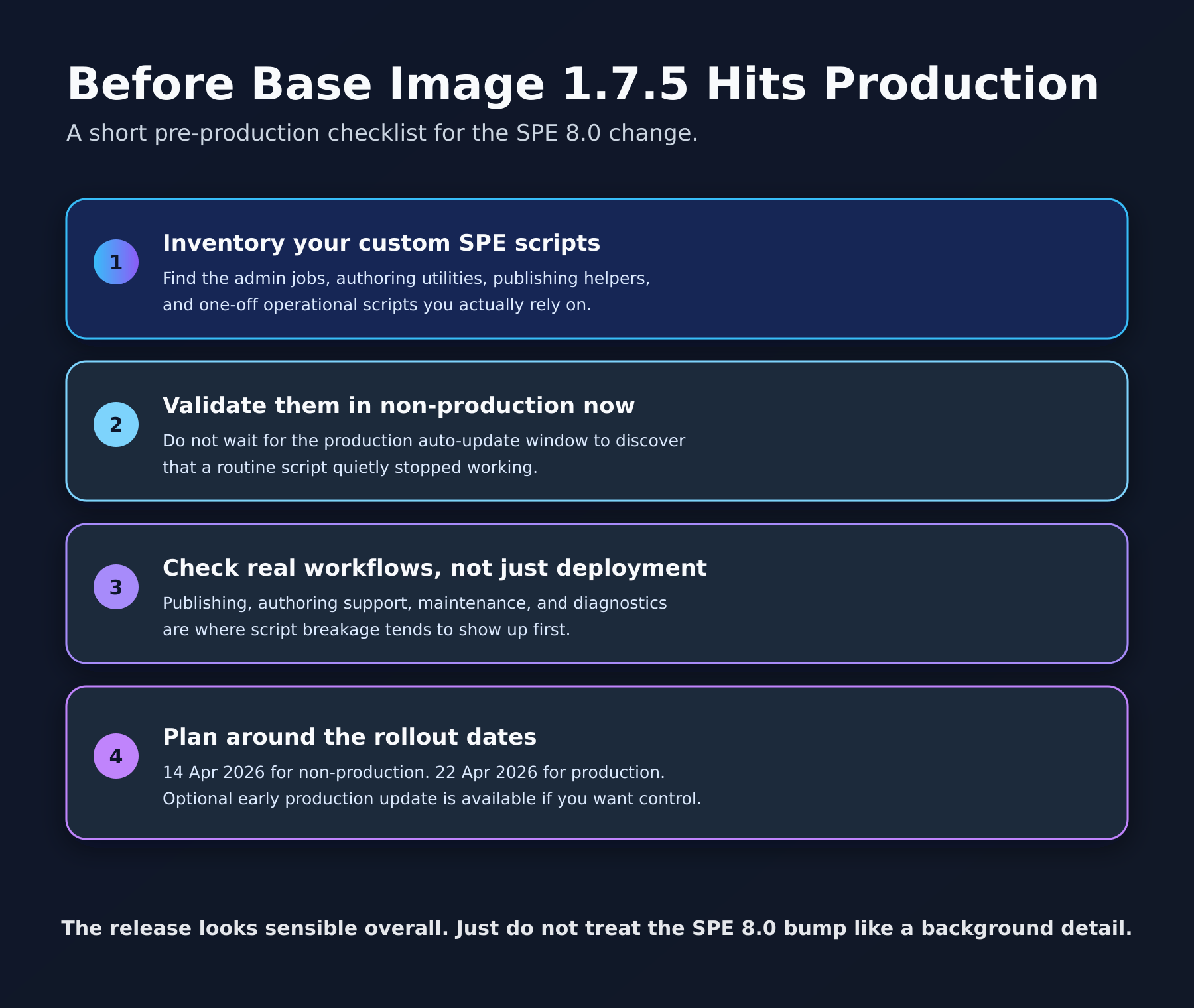
The sensible move is pretty straightforward:
Sitecore points to its compatibility guidance, which is the right place to start. The changelog does not spell out every compatibility issue, so it's better to be explicit about uncertainty here: we know there is upgrade risk, but the exact impact depends on what your scripts are doing.
The underlying platform improvements in 1.7.5 look sensible, especially the memory and resiliency work.
Still, the SPE 8.0 move is the headline.
Infrastructure tweaks are nice, script breakage is noisy.
If you're running SitecoreAI in anything resembling a serious delivery environment, this is a "check your automation before production" release, not a "read later" release.