Reading time: 15 min read
The Power of Sitecore Personalization for the Education Industry
How Sitecore Personalization helps the education industry create student-centered experiences.
Start typing to search...
How Sitecore Personalization helps the education industry create student-centered experiences.
The education industry—spanning K-12, higher education, and lifelong professional learning—is experiencing rapid disruption. Evolving learner expectations, digital-first experiences, the rise of AI, and the need to prepare students for a rapidly changing workforce. Students today expect the same personalized, intuitive experiences they get from brands like Netflix or Amazon, but many educational institutions are still stuck delivering static, one-size-fits-all communications and learning environments.
This is where personalization makes a difference. By using AI insights, behavioral data, and real-time interactions, schools and universities can create customized learning journeys, deliver targeted communications, and offer experiences that truly connect with each learner. From personalized course recommendations to tailored recruitment campaigns, institutions that embrace personalization can drive stronger engagement, improve retention, and foster a deeper sense of belonging.
In this blog, we'll dive into real-world examples of how educational institutions can use Sitecore personalization to transform the student experience—and why it's a must-have for staying competitive in today's education landscape.
When it comes to delivering personalized learning experiences at scale, Sitecore offers a powerful lineup of personalization technologies. Depending on your institution's digital strategy and Sitecore environment, there are several ways to bring personalization to life, including:
Since this blog focuses on real-world educational examples and what's possible with Sitecore personalization, we won't dig into the technical differences between these solutions here. But if you're curious about how they compare—and which one might be the best fit for your institution—check out our in-depth guide on Sitecore Personalization Deep Dive: XP vs XM Cloud vs Personalize.
Now, let's dive into how educational institutions can harness personalization to create more meaningful, connected student experiences.
The educational environment is experiencing unprecedented shifts, moving decisively away from traditional, one-size-fits-all instructional models toward more dynamic, learner-centric paradigms.1 This evolution is not just a passing trend but a direct response to deeper societal changes, technological advancements, and shifting learner expectations.
Personalization is quickly becoming a strategic necessity for educational institutions across K-12, higher education, and professional development sectors.2 Understanding the drivers behind this shift is essential to grasping the transformative potential of personalization technologies like those offered by Sitecore. Let's break down seven key challenges shaping the future of the education sector today.
Traditional education models focused heavily on knowledge retention, but today's workforce demands a very different skill set. Students need adaptability, critical thinking, problem-solving abilities, and digital fluency to succeed in an era of rapid technological change.1 Static knowledge is no longer enough. Personalized learning approaches help students master competencies at their own pace, tie learning directly to real-world skills, and keep education relevant.3 Personalization becomes a critical tool for preparing students to navigate complexity, change, and continuous learning throughout their lives.1
Today's learners are more diverse than ever—varying in age, background, learning styles, goals, and circumstances.4 There's no such thing as an "average" student.3 At the same time, students expect the same seamless, personalized digital experiences from their educational institutions that they enjoy from brands like Netflix and Amazon.5 They also expect flexibility in when, where, and how they learn, from hybrid to fully online models.6 Institutions unable to provide personalized, flexible experiences risk falling behind in both engagement and retention.5
Student disengagement is a persistent challenge that grows as learners progress through K-12 and higher education.4 Students often feel isolated, overwhelmed, or disconnected from curriculum relevance.7 Personalization helps by aligning learning to individual interests and goals, boosting motivation and fostering a sense of ownership.4 Interactive digital experiences—like AI-driven simulations and gamification—further enhance engagement.1 When students feel understood and supported, their motivation, achievement, and overall experience improve dramatically.4
Higher education institutions face intense competition for students, made tougher by demographic shifts and evolving priorities.8 Prospective students now expect communications that feel highly personalized to their interests, financial needs, and career goals.9 Generic outreach simply doesn't work anymore.9 Personalization throughout the recruitment cycle—from initial inquiry to final enrollment decision—has become a major differentiator. Institutions that deliver timely, tailored messaging, program recommendations, and financial aid information see stronger enrollment outcomes.9
Recruitment is just the beginning—keeping students enrolled and successful is critical. Personalized support systems can proactively identify at-risk students, tailor academic guidance, and deliver timely nudges that improve persistence.10 Technologies that integrate personalization and analytics enable early interventions that help reduce attrition.11 Students who feel connected, seen, and supported are far more likely to stay and succeed.7 As retention remains a vital KPI for institutional health, personalized approaches represent a smart, scalable investment.11
Personalization offers a pathway to greater educational equity by meeting individual needs across diverse learner groups.10 Adaptive technologies can support students with disabilities, language barriers, or socioeconomic challenges, helping them progress at their own pace.12 AI-powered tools enhance accessibility through features like auto-captioning, translation, and text-to-speech.13 However, ethical implementation is critical—institutions must address risks like algorithmic bias and data privacy concerns to ensure technology closes gaps rather than widens them.14
The shift toward personalization doesn't stop at graduation. Professional development and corporate training are also moving toward more tailored, data-driven experiences.15 Employees expect learning paths aligned with their roles, skill gaps, and career aspirations.15 Microlearning, self-paced options, and AI-driven course recommendations are becoming standard.16 Organizations investing in personalized training see better ROI through increased productivity, improved skill acquisition, and higher retention rates—mirroring the benefits seen in K-12 and higher education.17
Despite the clear benefits, scaling personalized learning presents challenges. Robust systems are needed to manage complexity without overwhelming educators and support staff.5 Strong governance around data privacy, security, and ethical AI use is crucial.5 Integrating personalization technologies with existing educational ecosystems can be resource-intensive.5 Finally, institutions must measure and prove the impact of personalization to secure ongoing investment. Choosing the right platform—like Sitecore's suite of personalization solutions—is a strategic decision that can make or break an institution's ability to meet these challenges effectively.
Personalization in education isn't just about delivering content—it's about meeting students where they are, anticipating their needs, and creating learning experiences that feel relevant and supportive. Using Sitecore's personalization tools, educational institutions can serve the right message, the right resource, or the right opportunity to each learner at just the right time. Here are some real-world use cases of how we can achieve personalization through Sitecore.
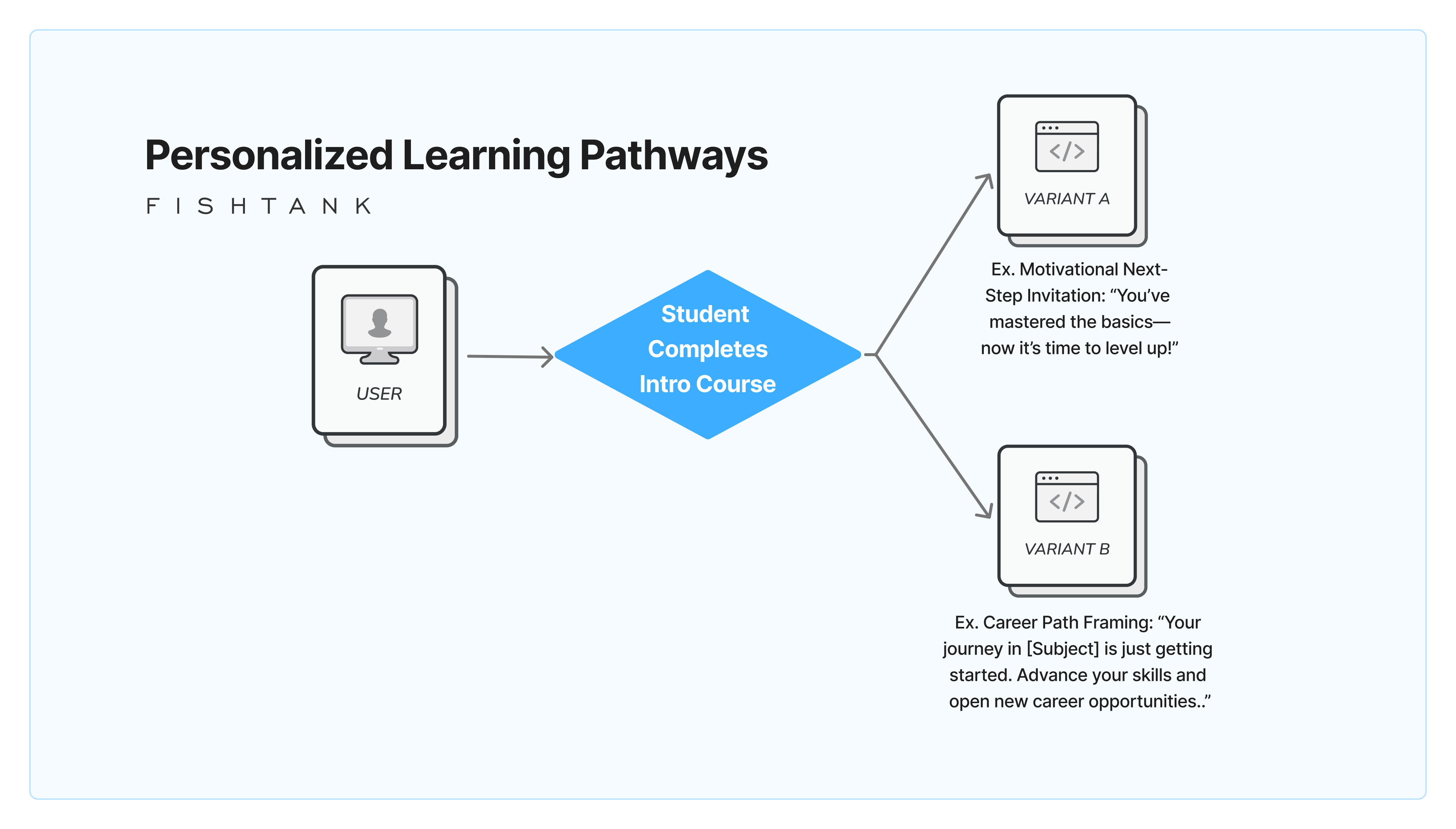
Student Need: Not every learner progresses the same way—different backgrounds, skill levels, and learning styles demand flexibility and relevance.
Personalization Approach: Create individualized learning journeys that adapt based on student interests, strengths, weaknesses, and real-time performance data. Allow students to move at their own pace and engage with material that aligns to their personal goals and future careers.
How Sitecore Delivers It:
Expected Outcome:
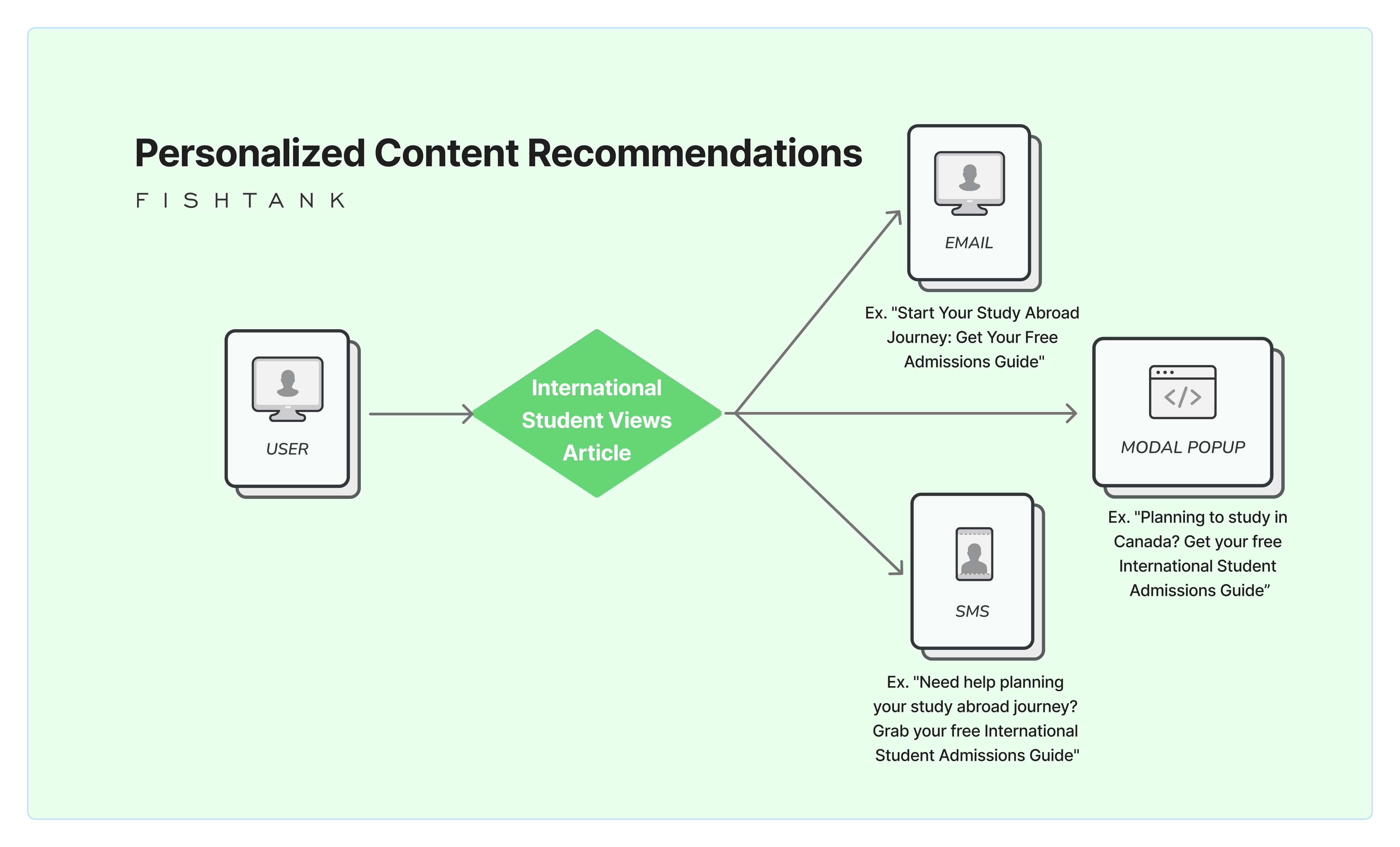
Student Need: Students are overwhelmed by information and need help finding the right resources, research, or learning tools.
Personalization Approach: Recommend tailored articles, videos, modules, research tools, or campus services based on the student's interests, courses, or recent activities.
How Sitecore Delivers It:
Expected Outcome:
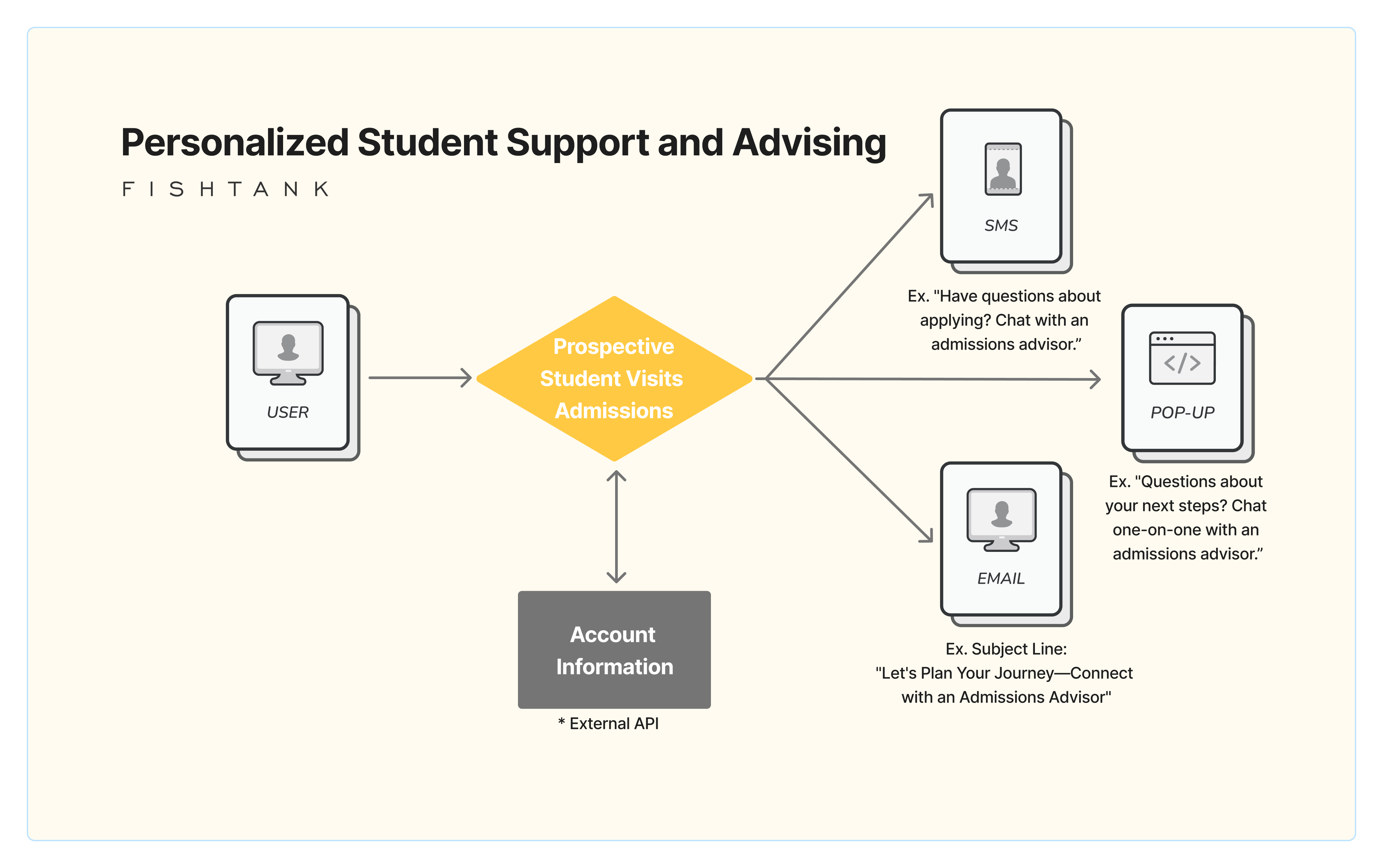
Student Need: Many students feel disconnected from academic support and don't know how—or when—to seek help.
Personalization Approach: Provide customized support and advising interventions based on academic performance, behavioral signals, goals, and risk factors.
How Sitecore Delivers It:
Expected Outcome:
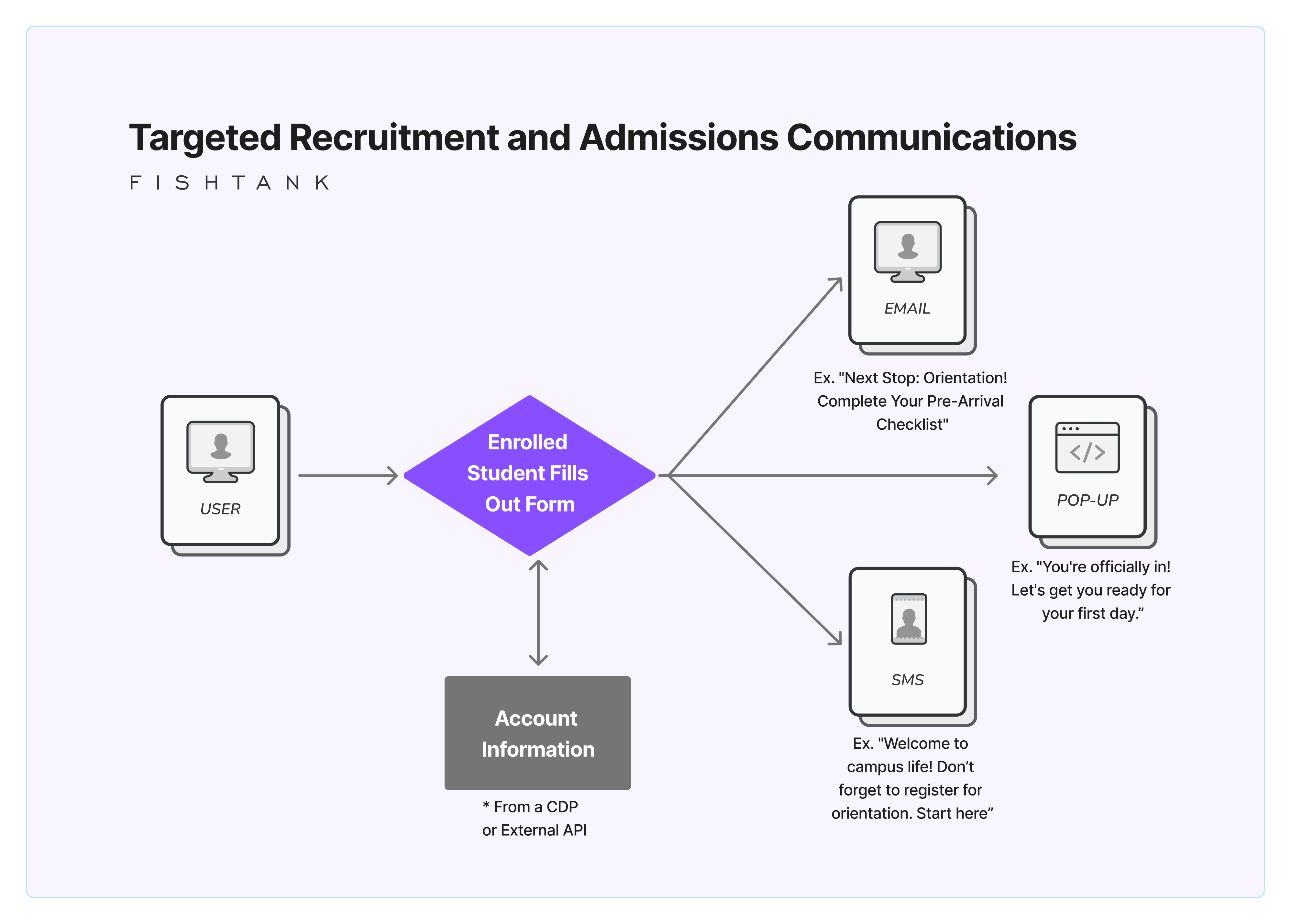
Student Need: Prospective students want information that's highly relevant to their academic interests, financial needs, and career goals—generic outreach just doesn't cut it.
Personalization Approach: Deliver dynamic admissions communications, personalized web experiences, and scholarship information based on individual profiles, behaviors, and interests.
How Sitecore Delivers It:
Expected Outcome:
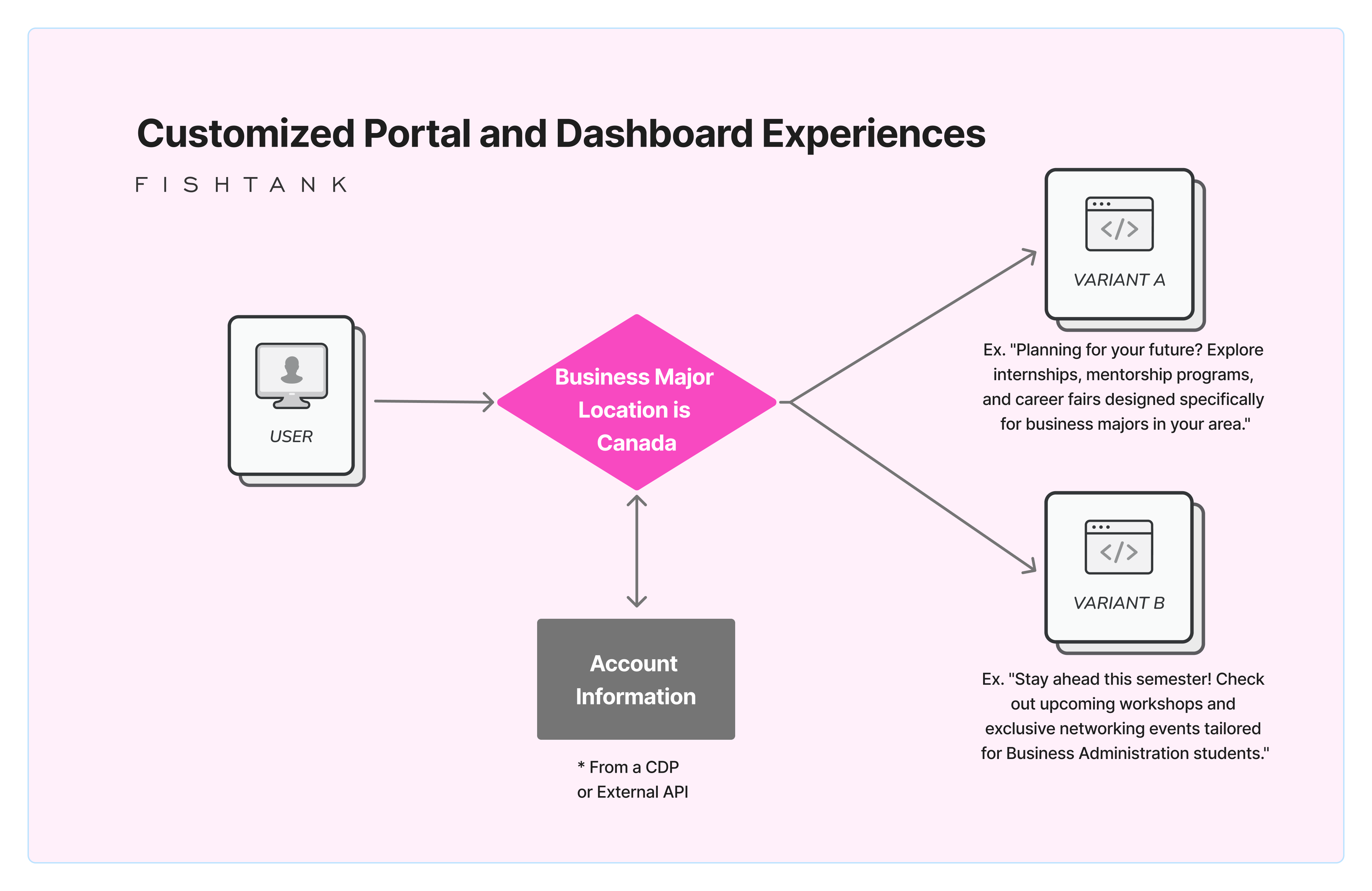
Student Need: Students, faculty, and staff juggle complex systems and information overload—finding what they need quickly is critical.
Personalization Approach: Build role-based, dynamically personalized dashboards that surface the most important information, tools, and notifications for each user.
How Sitecore Delivers It:
Expected Outcome:
These use cases show how personalization can fundamentally transform the educational journey—from recruitment to retention, from student support to professional growth. By delivering timely, relevant, and customized experiences, institutions can boost engagement, drive success, and create lifelong loyalty across the learner's entire educational journey.
Personalization isn't just a technology upgrade—it's a strategic advantage for institutions looking to boost student engagement, improve outcomes, and operate more efficiently. With Sitecore's personalization tools, educational institutions can create meaningful, data-driven experiences that support students at every stage. Here's how personalization makes a real impact:
Educational institutions that embrace Sitecore's personalization capabilities aren't just improving—they're leading the way. The future of education isn't about mass emails and static course catalogs; it's about delivering the right resource, at the right moment, through the right channel. Personalized, seamless, and actually meaningful. Sounds like the future of learning, right?
The education sector is facing massive shifts—changing learner expectations, rising competition, and the need for more flexible, connected experiences. Yet many institutions are still delivering generic communications and one-size-fits-all learning journeys. Enter Sitecore personalization. With AI-driven insights and real-time data, schools and universities can ditch the generic and start delivering hyper-relevant experiences—think adaptive learning paths, personalized content recommendations, targeted recruitment messaging, and proactive student support.
The result? More engaged students, higher enrollment and retention rates, and a learning experience that actually feels personal. Personalization isn't just a nice-to-have anymore—it's the future of education. Ready to make it happen? Let's chat.
Until next time, happy personalizing!