Reading time: 3 min read
SitecoreAI Search gets advanced ranking controls
SitecoreAI Search just got more hands-on. More control over ranking, better relevance tuning, and a few new things worth experiencing
Start typing to search...
Sitecore has added more advanced ranking controls to Search experiences in SitecoreAI. On the surfacel, this is a straightforward product update. In practice, it matters because search quality tends to break the user experience long before anyone notices your clever personalization strategy.
According to the changelog, SitecoreAI Search experiences now support:
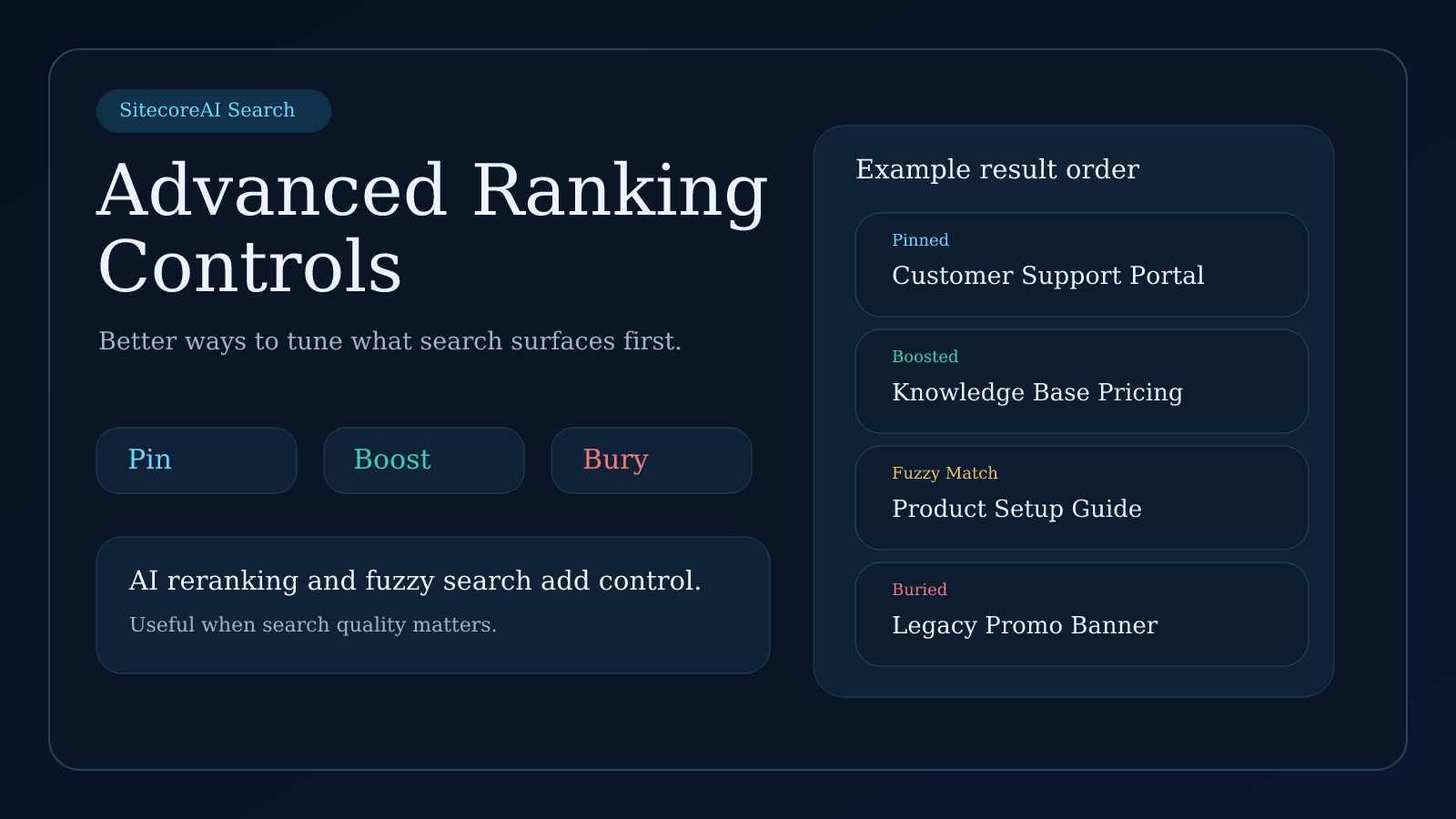 The ranking rules give teams direct levers. Semantic reranking adds a smarter relevance layer. Fuzzy search helps with the reality that users misspell things, abbreviate things, and generally refuse to search the way we wish they would.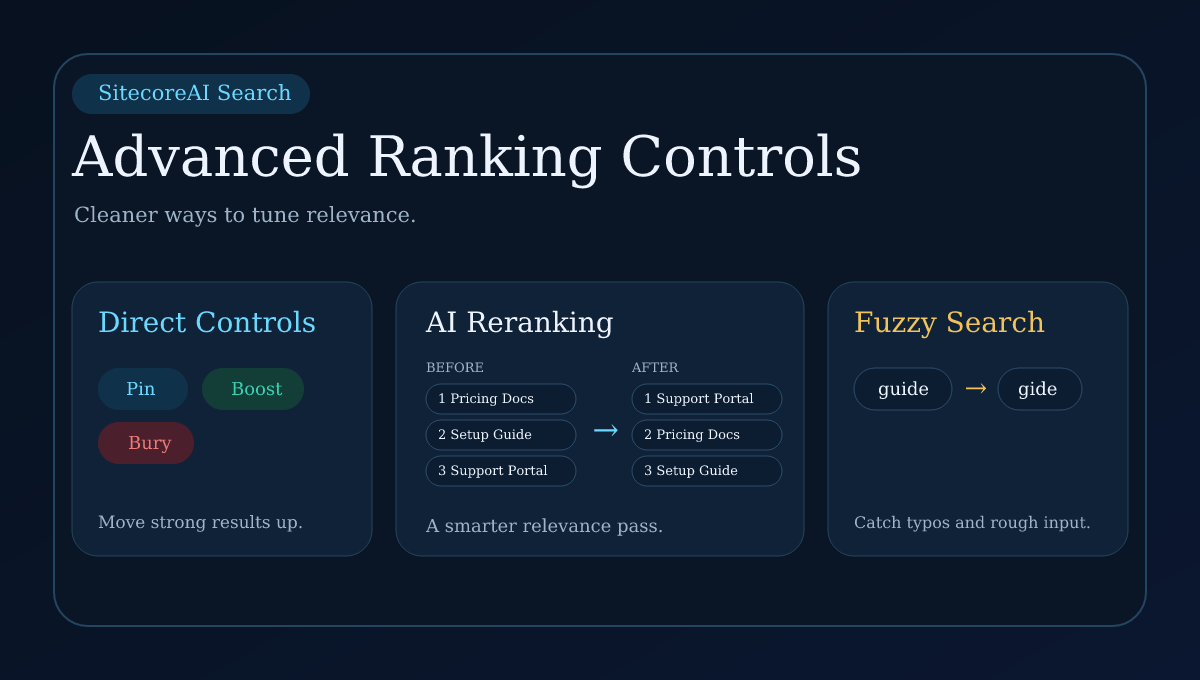
This is one of those updates that can improve search quality without requiring a full rebuild.
If you already have Sitecore Search experiences in place, the biggest win here is probably control. You can push key results up, bury weak ones, and pin high-value content where it actually belongs.
This is useful for:
Semantic reranking is the interesting part. In theory, it should help when keyword matching alone is too literal and misses intent. That can be a real improvement, especially on sites with messy content structures or inconsistent naming.
But it also means you should validate what the AI layer is doing. 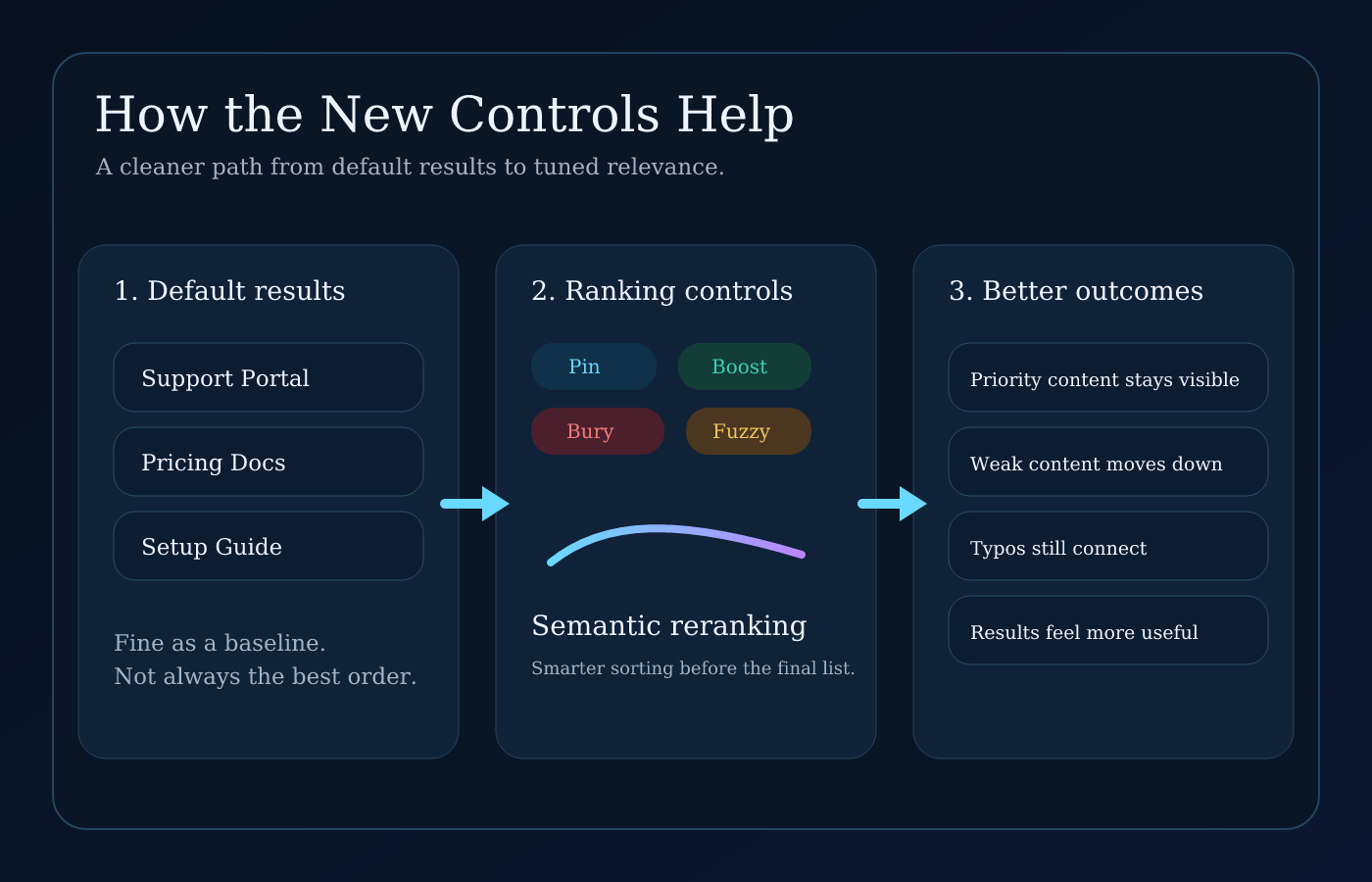
This update is worth a look if you're:
If your organization barely touches search settings, you might not feel much better here right away. But if search is business-critical, you probably will.
A few things stand out from the changelog. First, Sitecore says this feature is being rolled out in phases. So if you don't see it yet, that may simply mean your environment hasn't received it yet.
Second, more ranking power also means more room to make search worse in subtle ways. Pinning and boosting are useful, but they can quickly become manual patch jobs if nobody owns relevance properly.
Third, semantic reranking sounds promising, but the changelog is still fairly high-level. It doesn't say much about configuration depth, guardrails or how results behave across different content types. That means this is probably something to test with real queries before declaring victory.
This looks like a good update. It's not flashy, but it's useful.
The strongest part is the combination of manual control and smarter ranking. That's usually where search tooling gets practical instead of theoretical. Still, the phased rollout note and the limited detail in the changelog mean I'd treat this as a feature to evaluate, not blindly switch on and forget.
If your site depends on search, this is worth checking as soon as it lands on your tenant.